ADHD – More Than “Attention Problems”
When people hear ADHD, they most often think of a restless child who cannot sit still, or a person who “can’t focus”. But ADHD is much more than that. ADHD is the way the brain functions. This…
Psihotron
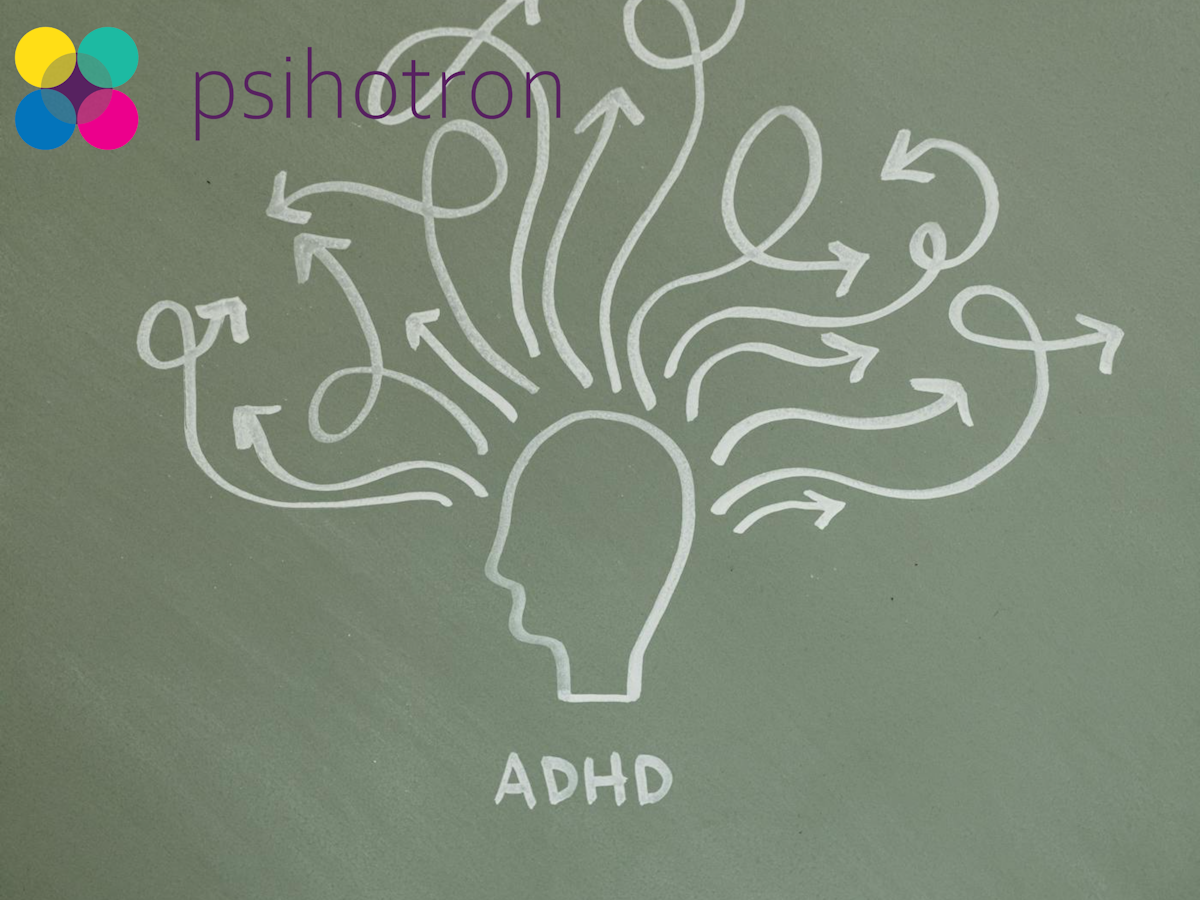
When people hear ADHD, they most often think of a restless child who cannot sit still or a person who “cannot focus”.
But ADHD is much more than that.
ADHD is the way the brain works.
It is not a lack of intelligence, laziness or a lack of discipline. It is a different way of processing information, attention, emotions and energy.
How ADHD actually looks
ADHD is often not visible from the outside the way we imagine it. In adults, and especially in women, it can look like this:
difficulty starting tasks
procrastination and a feeling of being overwhelmed
impatience and inner restlessness
forgetfulness and scatteredness
hyperfocus on whatever is interesting
tiredness and exhaustion without a clear reason
Many people with ADHD say:
“I know what I need to do, but it feels like I can't get started.”
ADHD and emotions
ADHD is not only a cognitive but also an emotional pattern.
It may include:
intense reactions
sensitivity to rejection
quick frustration
a need to withdraw or, on the other hand, impulsive reactions
This is not “overreacting”, but a nervous system that responds faster and more strongly.
ADHD and everyday life
People with ADHD often live between two states:
when something is not interesting → difficulty getting going
when it is → entering hyperfocus and losing track of time
So ADHD is not a problem of attention, but of attention regulation.
In everyday life this often means that the person does not need “more discipline”, but a different way of organizing their life.
For someone with ADHD, it can help:
to break tasks down into small, concrete steps
to use reminders and visual lists instead of relying on memory
to work in shorter time blocks with breaks
to reduce the number of decisions in advance (e.g. preparing things the evening before)
to introduce small, repeating routines, instead of constantly “starting over”
What often makes the difference is not the amount of effort, but how the day is structured.
Common misconceptions
ADHD is not:
“laziness”
“lack of willpower”
“a problem that just needs more discipline”
Many people with ADHD actually try harder than others — just in a way that is not visible from the outside.
ADHD and relationships
ADHD can also affect relationships:
a need for space
difficulty maintaining constant contact
fluctuations between closeness and withdrawal
This does not mean that the person does not love others, but that they manage their energy and attention differently.
The positive side of ADHD
ADHD also brings strengths:
creativity
speed of thinking
ability to connect ideas
deep focus when there is interest
authenticity
What helps
ADHD does not call for “more discipline”, but for:
structure adapted to the person
understanding one's own rhythm
regulating energy, not just time
support, not pressure
Final thought
ADHD is not something that needs to be “fixed”.
It is something to understand and learn to live with in a way that works for you.
Because when a person with ADHD finds their own way of functioning —
what was once an obstacle often becomes their strength.
Important note (context in BiH)
It is important to note that in Bosnia and Herzegovina, adult ADHD still does not have a clearly standardized diagnostic framework, nor is it recognized in clinical practice to the same extent as in some other countries.
That is why our clients, when they want a formal diagnosis or psychiatric assessment, most often travel abroad, where there is a more developed assessment system and greater experience in working with adult ADHD. (Most of our citizens who face ADHD challenges have received their diagnosis in Croatia or Serbia.)
On the Psihotron platform, we work on understanding and everyday tools for functioning, while the formal medical diagnosis is made by a psychiatrist after comprehensive psychological testing.